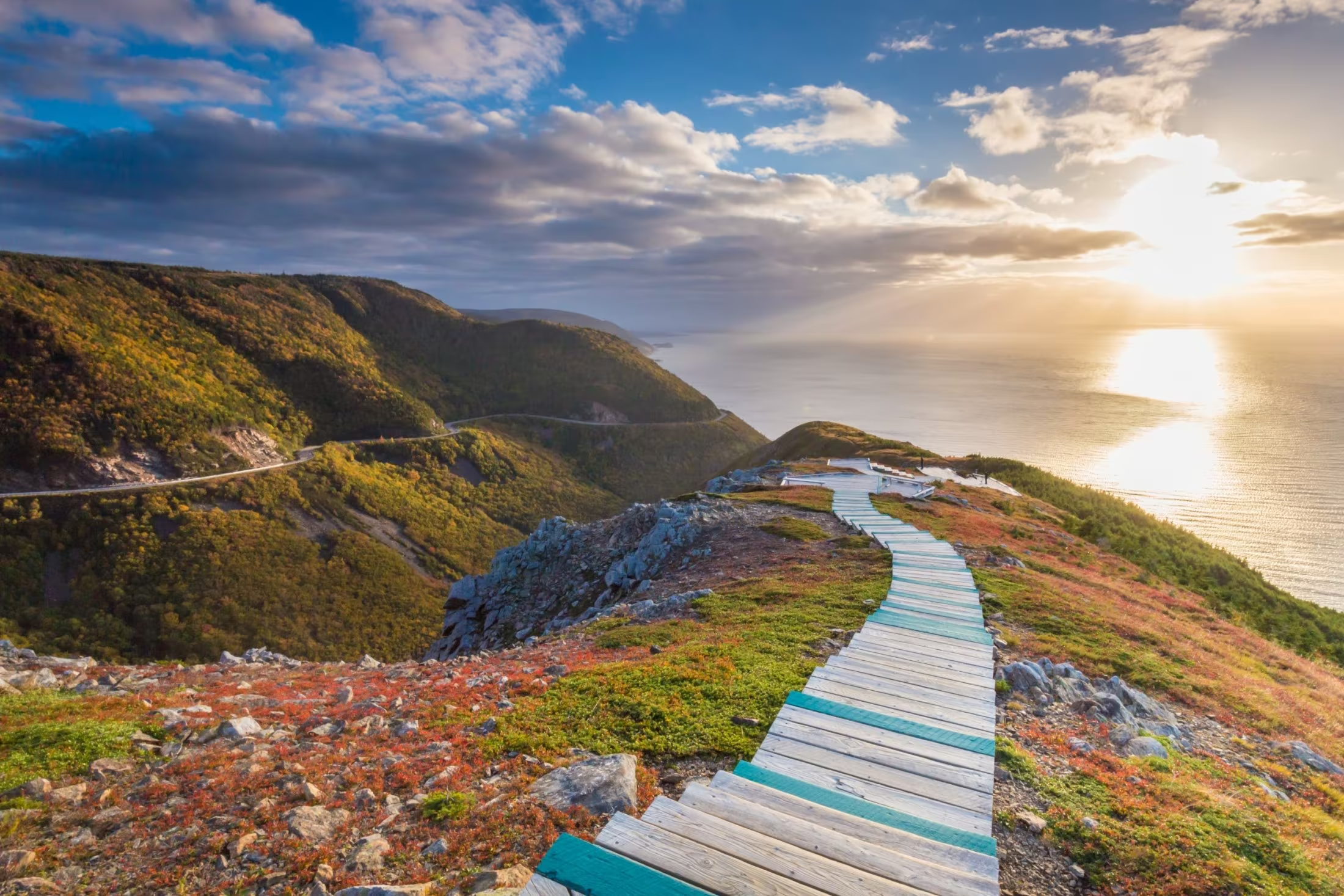
Le Buttereau Trail – Cape Breton Highlands National Park

The trail explores a spruce forest, old fields and foundation ruins on a “buttereau” (small hill) overlooking the Chéticamp River and Gulf of St. Lawrence. Wildflowers, trees and shrubs have invaded these pastures that were once tilled by the Acadian pioneers, making an ideal spot for birds and small mammals. Plaques commemorate former Acadian homesteads. Continue onto the connecting Chemin du Buttereau Trail to add 4.6 km to your hike.

Trailhead: On the Cabot Trail opposite the Grande Falaise picnic area. 

Significant Feature: Acadian history, ocean

Length: 1.6 km (1 mi) loop.

Hiking Time: 30–45 minutes

Elevation: 10–55 m (35–180 ft.)Interpretive loop. Suitable for most skill levels. Short climbs.
Trail Rating: Easy

GPS Co-ordinates for Trailhead (in decimal degrees):
Lat: 46.676389 Long: -60.957946

Park is open year-round but full visitor services are only available from mid-May until mid-October.

Open from mid-May to mid-October. A park pass is required for hiking or use of other services in the park; park entry fee applies. Check in at the Parks Canada visitor centres in Chéticamp (16 Visitor Centre Rd., situated on the west side of the park) or in Ingonish (37637 Cabot Trail, on the east side of the park) to obtain passes, information on visitor safety and any other information you may need, including a trail location map.

For your comfort and safety:

  • Do not approach, disturb or feed wild animals.
  • Take along appropriate clothing – rapid weather changes often occur on the plateau or along the coast.
  • Carry water with you, especially for longer trails, climbs or open barrens.
  • Bring insect repellent as black flies and mosquitoes are common all summer.
  • Mountain bikes are permitted only where indicated, for public safety and protection of the environment.
  • Stay on designated trails and boardwalks to protect fragile vegetation.
  • Do not throw food or scraps along the trails or roads.
  • Read "Keep it Wild, Keep it Safe" brochure, available at park visitor centres and on the Parks Canada website.- Recreational drone use is prohibited within the national park for the safety of wildlife and other visitors.

La Bloc Beach

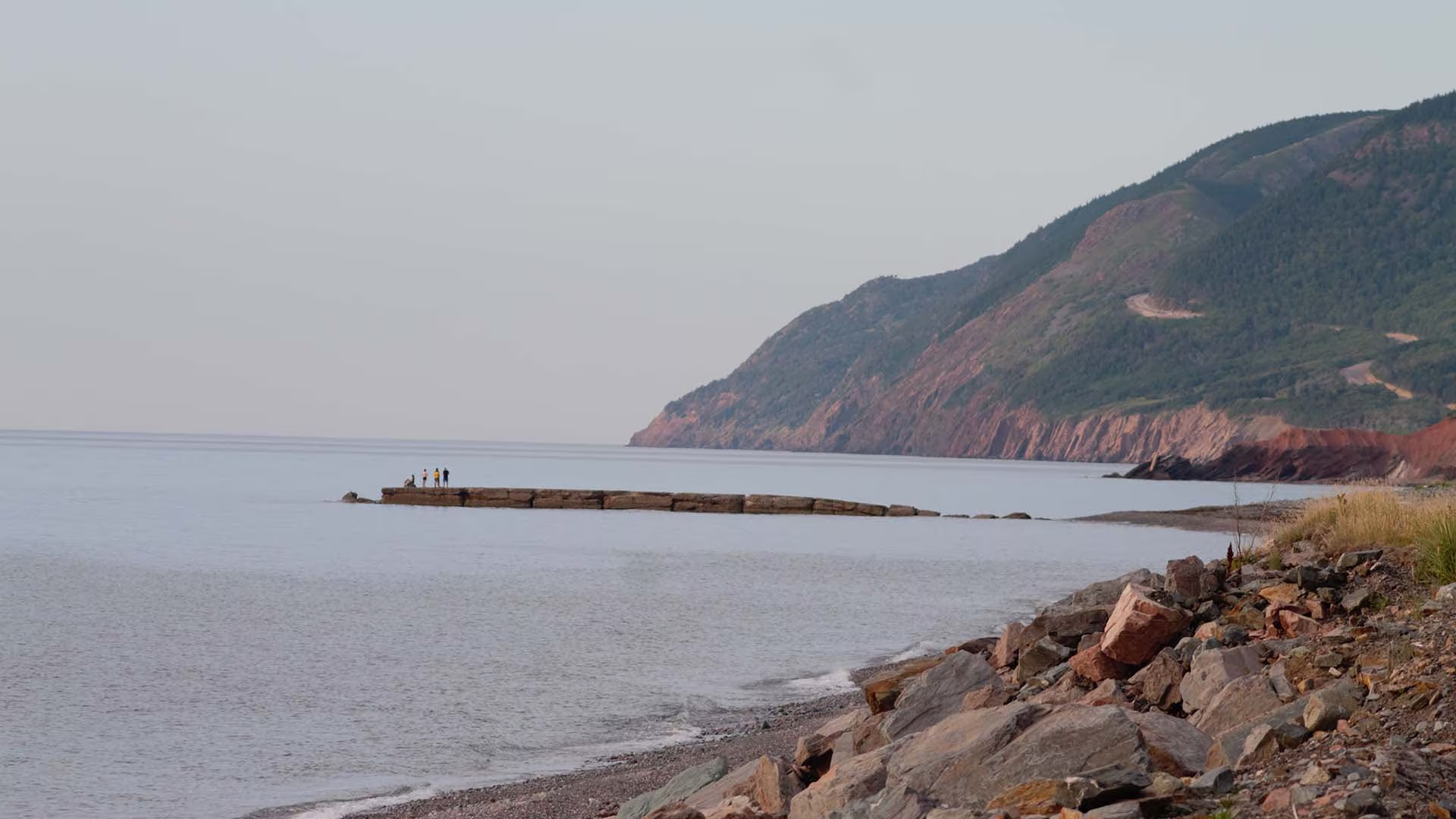
Connect with nature and local history with a visit to La Bloc Beach. Explore the pebbly shoreline, take a dip in the warm gulf waters, or savour a picnic with the sea at your feet and the mountains behind you. Keep your binoculars nearby to watch for the majestic sight of whales breaching off the coast. 

Learn about the fishing traditions of the nearby Acadian community. Take in the remnants of a historic wharf, still reaching into crashing waves of the gulf, and imagine life on the rugged coastline.

Photographers will love the uninterrupted coastal views and the unique features of Presqu’île and Pillar Rock close by. End your day at the beach to take in spectacular sunsets and get inspired for your next adventure. 

Picnic area, interpretive panels and pit privies on site. No lifeguards on duty at this beach.

Cape Breton Highlands National Park’s operating season is from mid-May to mid-October, with full services in July and August. The Cabot Trail is open year-round. A park pass is required for use of all services and facilities in the national park, including beaches. Revenues are used to maintain and improve park services.

For more swimming adventures, visit our website:  https://parks.canada.ca/pn-np/ns/cbreton/activ/baignade-swimming
#KeepitWild
Please be responsible and join with us in caring for our environment. Take your garbage with you, keep wildlife at a safe distance, and stay on designated trails to protect fragile plant life. 
Nature, other visitors, and future generations will be thankful for your stewardship.
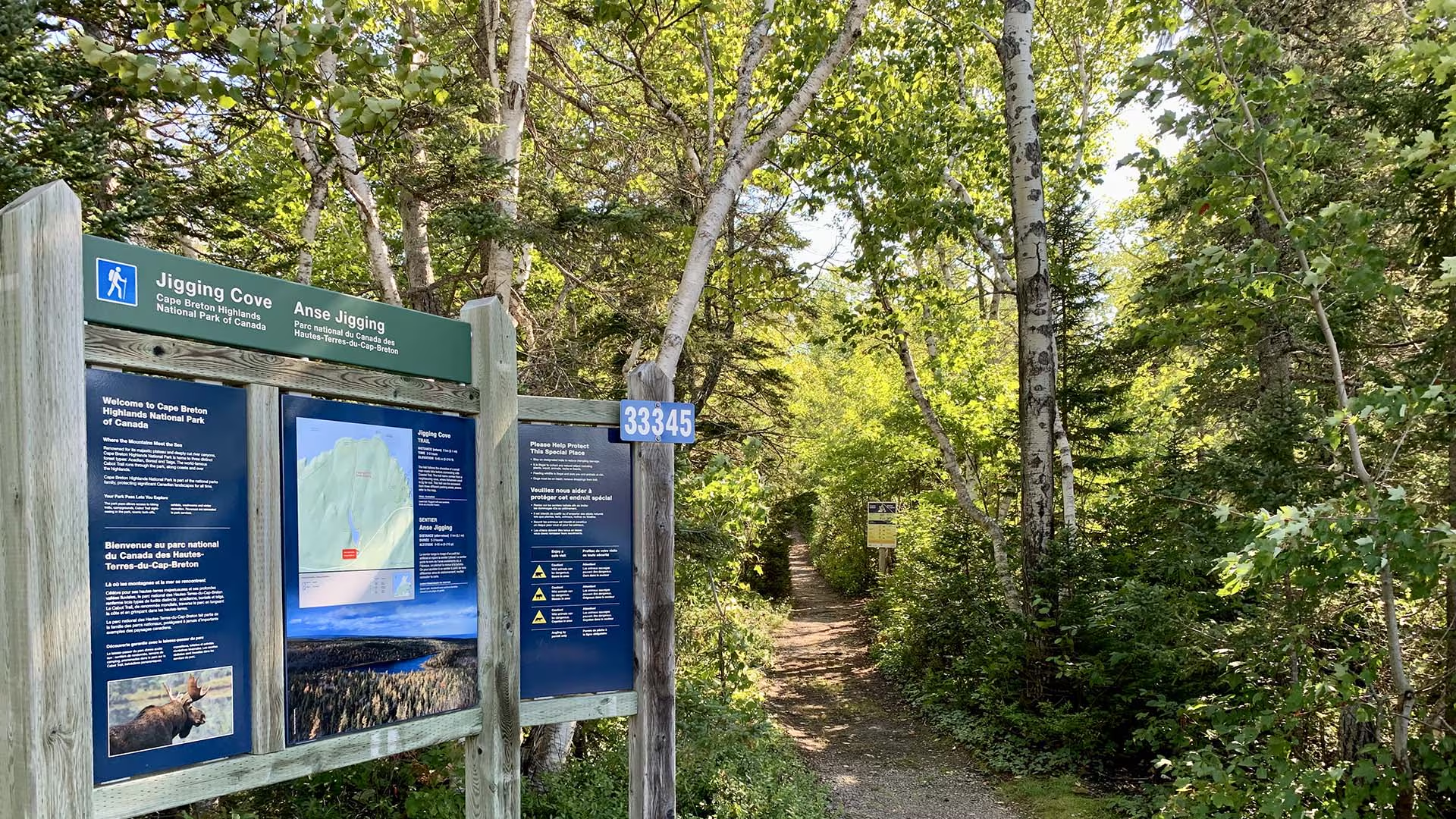
Jigging Cove Trail

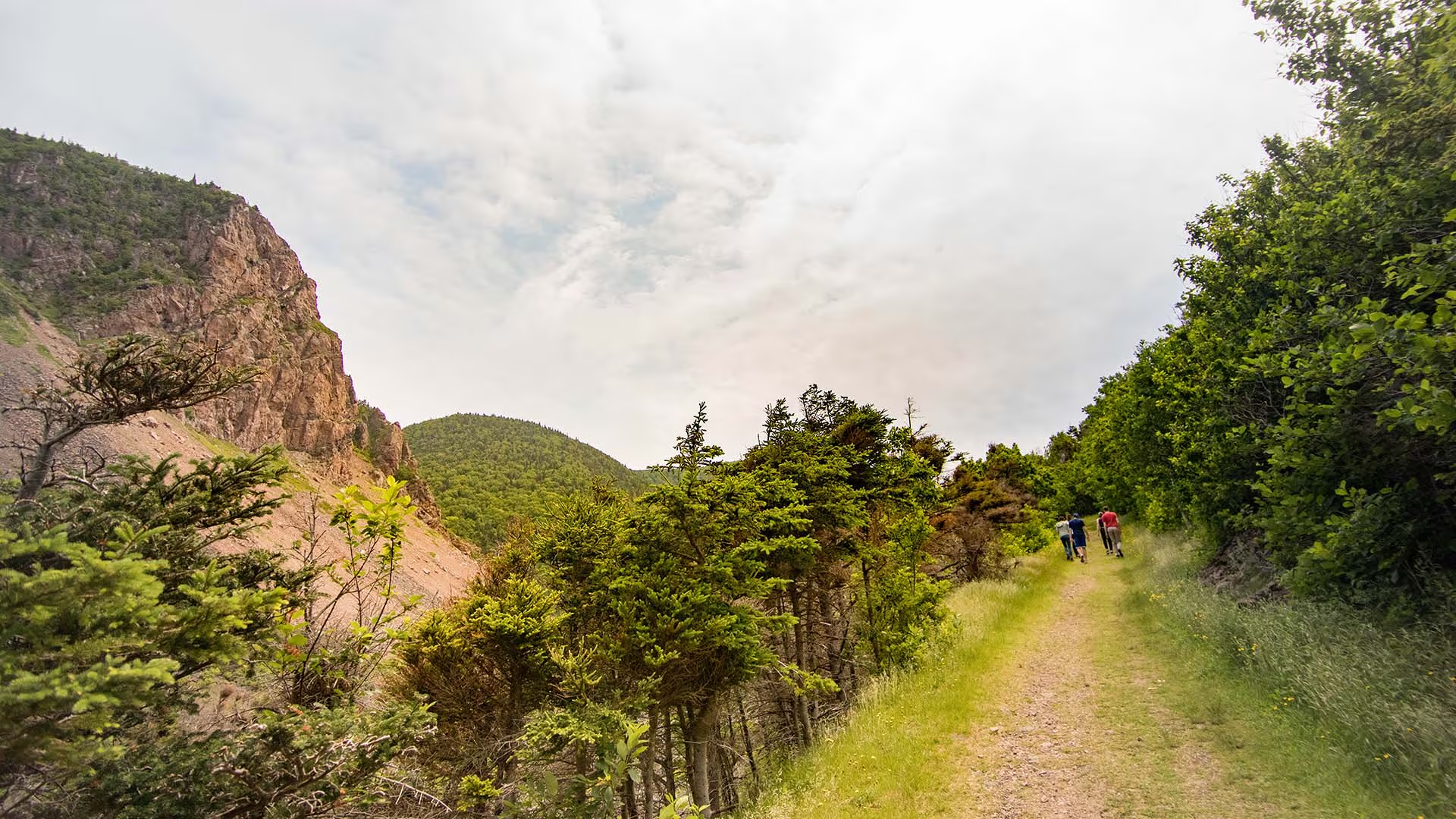
Birders and other nature lovers will enjoy the varied wildlife on this short relaxing trail, following the shoreline of a small man-made lake. The trail name comes from a nearby cove, where fishermen used to jig for cod. 

Trailhead: Parking lot on the Cabot Trail

Significant Feature: Acadian forest, lake

Length: 2.15 km (1.6 mi) loop

Hiking Time: 2–3 hours

Elevation: 0–65 m (0–215 ft.) 

Trail Rating: Easy – Level trail. Narrow with wet sections. 


GPS Co-ordinates for Trailhead (in decimal degrees): Lat: 46.787754 Long: -60.346626

Park is open year-round but full visitor services are only available from mid-May until mid-October.  A park pass is required all year for hiking or use of other services in the park; park entry fee applies. Check in at the Parks Canada visitor centres in Chéticamp (16 Visitor Centre Rd., situated on the west side of the park) or in Ingonish (37637 Cabot Trail, on the east side of the park) to obtain passes, information on visitor safety and any other information you may need, including a trail location map.

For your comfort and safety:

  • Do not approach, disturb or feed wild animals.
  • Take along appropriate clothing – rapid weather changes often occur on the plateau or along the coast.
  • Carry water with you, especially for longer trails, climbs or open barrens.
  • Bring insect repellent as black flies and mosquitoes are common all summer.
  • Mountain bikes are permitted only where indicated, for public safety and protection of the environment.
  • Stay on designated trails and boardwalks to protect fragile vegetation.
  • Do not throw food or scraps along the trails or roads.
  • Read "Keep it Wild, Keep it Safe" brochure, available at park visitor centres and on the Parks Canada website.- Recreational drone use is prohibited within the national park for the safety of wildlife and other visitors.
Family

Jack Pine Trail

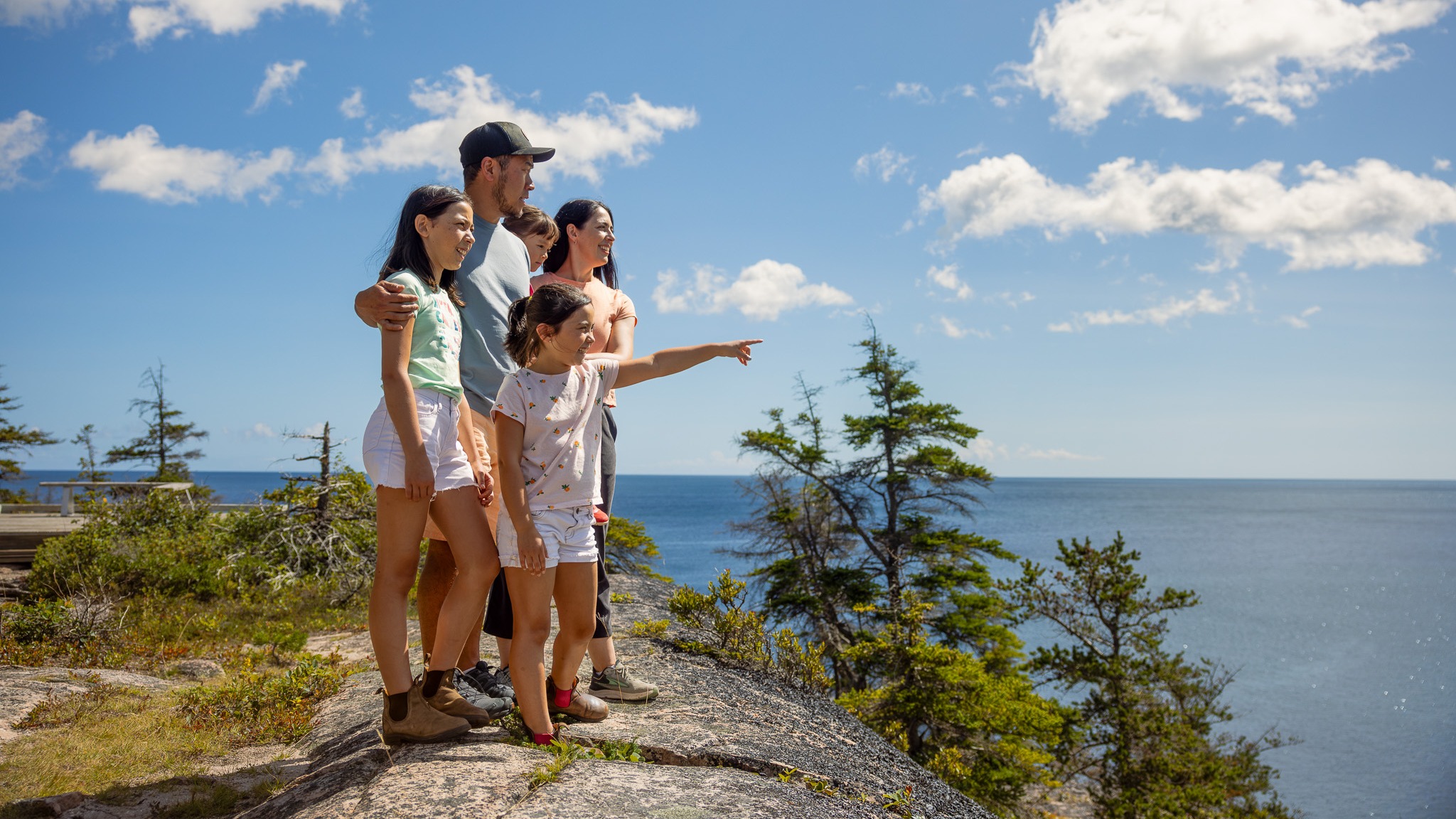
 Discover the serene beauty of the Jack Pine Trail in Cape Breton Highlands National Park. This short loop trail winds through a unique stand of jack pine with sweeping views of the Atlantic coastline.


This trail can be easily accessed from the Cabot Trail at Black Brook day-use area, this hike delivers both drama and calm in one short outing.


Whether you’re hiking solo, with friends, or with someone special, it’s the perfect way to connect with nature and let the sea-air refresh your spirit.

Trailhead: Turn off the Cabot Trail at the Black Brook day use area and turn left to the upper parking lot. 

Significant Feature: Atlantic coastline

Length: 2.3 km (1.4 mi) loop

Hiking Time: 1 hour

Elevation: 10–55 m (35–180 ft.)Interpretive loop. Short climbs. Some rocky, rugged sections.

Trail Rating: Easy – Family-friendly trail suitable for all visitors

GPS Co-ordinates for Trailhead (in decimal degrees):
Lat: 46.778569 Long: -60.332248

Park is open year-round but full visitor services are only available from mid-May until mid-October. A park pass is required all year for hiking or use of other services in the park; park entry fee applies.  Check in at the Parks Canada visitor centres in Chéticamp (16 Visitor Centre Rd., situated on the west side of the park) or in Ingonish (37637 Cabot Trail, on the east side of the park) to obtain passes, information on visitor safety and any other information you may need, including a trail location map.

For your comfort and safety:

  • Do not approach, disturb or feed wild animals.
  • Take along appropriate clothing – rapid weather changes often occur on the plateau or along the coast.
  • Carry water with you, especially for longer trails, climbs or open barrens.
  • Bring insect repellent as black flies and mosquitoes are common all summer.
  • Mountain bikes are permitted only where indicated, for public safety and protection of the environment.
  • Stay on designated trails and boardwalks to protect fragile vegetation.
  • Do not throw food or scraps along the trails or roads.
  • Read "Keep it Wild, Keep it Safe" brochure, available at park visitor centres and on the Parks Canada website.- Recreational drone use is prohibited within the national park for the safety of wildlife and other visitors.

Green Cove Trail – Cape Breton Highlands National Park

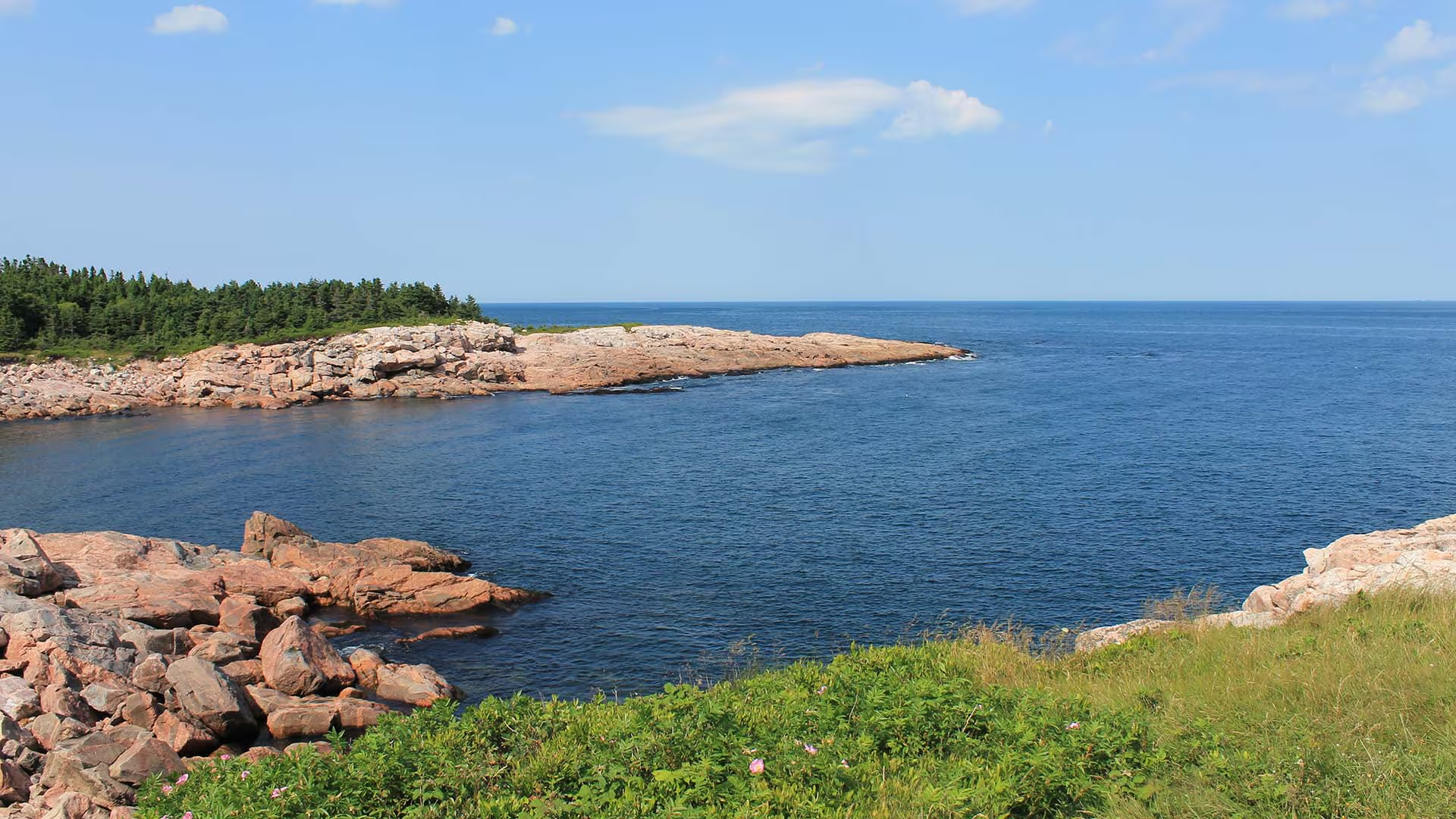
Although this trail is very short, a mere “leg stretcher”, it is quite fascinating. From this rocky granite headland jutting out into the sea, you can watch the ocean crash against the rocks or catch a glimpse of whales offshore as fishermen tend to their lobster traps, daring to come so close to the rocks. Notice the twisted stunted trees – known as “krummholz” – and the leathery leaves of the bayberry. Plants here have adapted to this windy, salt-sprayed coastal environment.

Caution: Keep away from rock edges during high wind and waves and always use caution around dark rocks.
Trailhead: Parking lot on the Cabot Trail 

Significant Feature: Atlantic coastline, geology

Length: 0.2-km (0.1-mi) loop

Hiking Time: 10 minutes

Elevation: 10 m (35 ft.)
Trail Rating: Easy

GPS Co-ordinates for Trailhead (in decimal degrees):
Lat: 46.750779 Long: -60.324785

Park is open year-round but full visitor services are only available from mid-May until mid-October. A park pass is required all year for hiking or use of other services in the park.  Check in at the Parks Canada Visitor Centres in Chéticamp (16 Visitor Centre Road, just off the Cabot Trail on the west side of the park) or in Ingonish (37637 Cabot Trail, on the east side of the park) to obtain passes, information on visitor safety and any other information you may need, including a trail location map.

For your comfort and safety:

  • Do not approach, disturb or feed wild animals.
  • Take along appropriate clothing – rapid weather changes often occur on the plateau or along the coast.
  • Carry water with you, especially for longer trails, climbs or open barrens.
  • Bring insect repellent as black flies and mosquitoes are common all summer.
  • Mountain bikes are permitted only where indicated, for public safety and protection of the environment.
  • Stay on designated trails and boardwalks to protect fragile vegetation.
  • Do not throw food or scraps along the trails or roads.
  • Read "Keep it Wild, Keep it Safe" brochure, available at park visitor centres and on the Parks Canada website.- Recreational drone use is prohibited within the national park for the safety of wildlife and other visitors

Fishing Cove Trail

You are 355 metres (1165 feet) above sea level! 

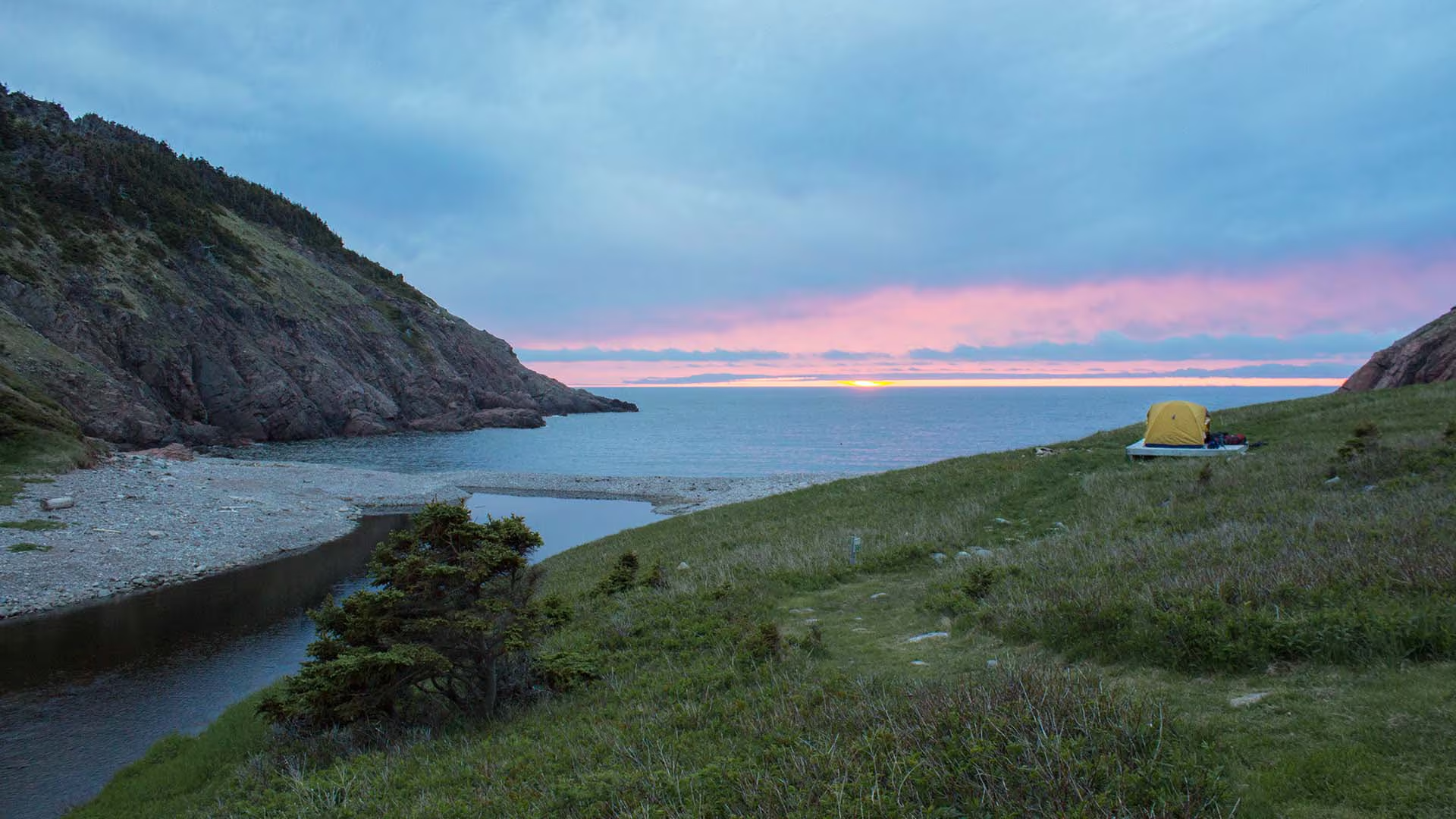
Hike from the top of the mountain about 6 kilometres down to a small ocean cove and grassy clearing – the only designated wilderness camp site in the park. This was once the site of a Scottish fishing community and these settlers traded with the French for supplies. Explore the beach, roam the hills or swim in fresh or salt water. You must register at a Parks Canada visitor centre prior to camping.

Trailhead: On the Cabot Trail at the top of MacKenzie Mountain. 

Significant Feature: Acadian forest, ocean cove and headlands 
Length: 12 km (7.5 mi) return

Hiking Time: 5–6 hours

Elevation: 0–355 m (0–1165 ft.) Steep descent. Some muddy sections. No potable water on site. If camping, bring your own toilet paper.
Trail Rating: Difficult


GPS Co-ordinates for Trailhead (in decimal degrees): Lat: 46.761030 Long: -60.834544

Park is open year-round but full visitor services are only available from mid-May until mid-October.

A park pass is required all year for hiking or use of other services in the park; park entry fee applies. Check in at the Parks Canada visitor centres in Chéticamp (16 Visitor Centre Rd., situated on the west side of the park) or in Ingonish (37637 Cabot Trail, on the east side of the park) to obtain passes, information on visitor safety and any other information you may need, including a trail location map.

For your comfort and safety:

  • Do not approach, disturb or feed wild animals.
  • Take along appropriate clothing – rapid weather changes often occur on the plateau or along the coast.
  • Carry water with you, especially for longer trails, climbs or open barrens.
  • Bring insect repellent as black flies and mosquitoes are common all summer.
  • Mountain bikes are permitted only where indicated, for public safety and protection of the environment.
  • Stay on designated trails and boardwalks to protect fragile vegetation.
  • Do not throw food or scraps along the trails or roads.
  • Read "Keep it Wild, Keep it Safe" brochure, available at park visitor centres and on the Parks Canada website.- Recreational drone use is prohibited within the national park for the safety of wildlife and other visitors. 

Eco-Capers

Explore the geology at Presqu’ile’s rocky beach, discover the flora and fauna of trails in the Acadian and boreal forests, investigate the fascinating life in a bog, and dip your toe in the rich marine environment. Every weekday brings a new, hands-on adventure. Ask for details on locations and register at the visitor centres or campground kiosks.

Monday – Friday

July and August – 3 pm

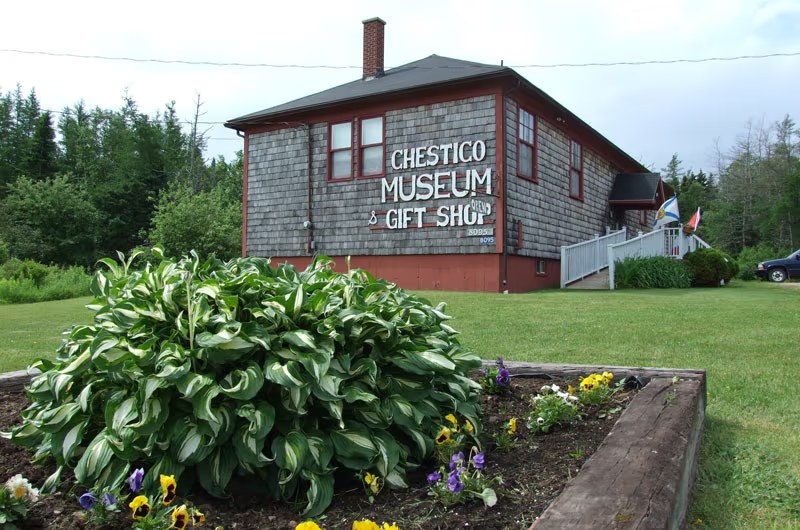
Chestico Museum & Historical Society

The Chestico Museum has operated as a community museum since 1986. Highlighting the history and heritage of the Port Hood area, its mission has been to provide local residents and visitors with a unique heritage experience. Port Hood’s marine heritage during the Age of Sail, its heyday as a coal mining town in the early 20th century, and its status as the county seat and commercial centre for Inverness have all been sources for displays over the years.


Most of the artifacts in the Chestico Museum came from the estate of John Hart (1876-1964), a merchant and long-time resident of Port Hood. These artifacts reflect the household of a middle-class family in the area during the late 19th- and early 20th-century. The collection includes furnishing, dishware, photographs, clothing, and books.

In addition, the museum also includes unique items such as a printing press belonging to former Port Hood Greeting printer D.W. Jones, a bottle manufactured by the Port Hood Bottling Factory, a 1919 Thomas Edison working gramophone and records, locally made ship models, agricultural and fishing implements, and an extensive collection of antique clothes irons dating back over two hundred years.

The Chestico Museum Archives houses a large collection of records, maps, photographs, and family histories. Histories of the heritage houses and buildings, as well as extensive genealogical material on Port Hood families are also available.

At present, plans are being made to establish an Inverness County Archives to house the large collection of documents pertaining to the history of the area.

Cape Breton Highlands National Park

One of Canada’s most enchanting places, where the mountains meet the sea. As you hug the world-famous Cabot Trail coastline, you’ll wind through Cape Breton Highlands National Park, where lush, forested river canyons carve into the ancient plateau, edged by rust-coloured cliffs. The cool maritime climate and rugged landscape of the park permit a unique blend of Acadian, Boreal and Taiga habitats, plants and animals. This special mix of northern and southern species is not found anywhere else in Canada. Within the park, several dozen species of rare or threatened plants and animals can be found, as well as old growth forests of international importance. Small populations of arctic-alpine plants left over from the last ice age can also be found here. 

There are numerous viewpoints scattered along the Cabot Trail, giving visitors ample opportunities to pull safely off the road to take pictures, observe wildlife, or learn about a special aspect of the Cape Breton Highlands National Park. In particular, the look-offs at French, North, and MacKenzie mountains offer unforgettable vistas of the rugged coastline, fishing boats in the Gulf of St. Lawrence, and purple-hued Cape Smokey. Keep your eyes open for moose and bald eagles. You might even catch sight of a minke or pilot whale breaching the waves in the Atlantic Ocean or the Gulf of St.Lawrence.
Outdoor Experiences
HikingOne of the best ways to immerse yourself in the Park is by exploring the 26 hiking trails, ranging from easy strolls to challenging climbs – all leading to panoramic views of canyons, highlands, or seacoasts. Visit the Parks Canada Visitor Information Centres in Cheticamp or Ingonish Beach to pick up a trails map.
Gone Fishing Cape Breton Highlands National Park offers recreational fishing opportunities, in season, on its many lakes and streams. The most sought after species is the native brook or speckled trout. 
Before fishing in the national park, anglers should call ahead and confirm season dates and catch limits. There is a permit and license fee applied, along with equipment restrictions. Regulations differ in most cases from those for fishing in provincial waters outside the park. Visitors can get updated information from Parks Canada at the warden office by calling 902-285-2582.
For more information on fishing in Cape Breton Highlands National Park visit Fishing – Cape Breton Highlands National Park (canada.ca)
SwimmingCape Breton Highlands is home to a variety of superb beaches. Choose between salt or freshwater, or even enjoy both at one location. The Atlantic Ocean, Gulf of St. Lawrence and our tannin-rich brooks and lakes offer a wonderful variety for the water enthusiast.  
For more swimming adventures, visit our website: https://parks.canada.ca/pn-np/ns/cbreton/activ/baignade-swimming. 
CyclingRated one of the world’s top ten cycling destinations by Lonely Planet, the Cabot Trail is a must-do for experienced cyclists. The Park also offers cycling on several designated trails, including Clyburn Valley, Salmon Pools, and Le vieux chemin du Cap-Rouge. For more information, visit our website: https://parks.canada.ca/pn-np/ns/cbreton/activ/cyclisme-cycling.
Visitor Centre locations

  • West entrance (Chéticamp): 16 Visitor Centre Road, GPS location: N46 38.784 W60 57.029
  • East entrance (Ingonish): 37637 Cabot Trail, GPS location: N46 38.450 W60 24.233

Parks Canada’s knowledgeable staff will launch your adventure by providing an itinerary tailored to your needs and interests. Along with your park pass and map, get safety tips and informed suggestions on activities and places to discover.  If travelling with young adventurers, ask about Parks Canada Xplorers and Club Parka activities.
 In Chéticamp, stay connected with Wi-Fi, and visit the nature bookstore to pick up field guides, local cultural history books, and gift items. Charge up at our electric vehicle charging stations.
In Ingonish, check out the interactive map to help you plan your visit, and take a little something home from the official Parks Canada merchandise. For those who want to sleep under the stars, without the fuss, Cape Breton Highlands National Park offers oTENTik units at Cheticamp Campground, Broad Cove Campground and Ingonish Beach Campground.
#KeepitWild
Please be responsible and join with us in caring for our environment. Take your garbage with you, keep wildlife at a safe distance, and stay on designated trails to protect fragile plant life. 
Nature, other visitors, and future generations will be thankful for your stewardship. 
Bog Trail

In keeping with Parks Canada’s mandate to protect the natural environment, a boardwalk keeps your feet dry as you walk while preventing you from trampling the fragile life in this highland plateau bog. A self-guiding trail, signs explain life here – pitcher plants, delicate orchids, colourful dragonflies, green frogs and gigantic moose. The trail, as well as the privy at the trailhead, is wheelchair accessible. Ideal for baby strollers.

Trailhead: On the Cabot Trail at the top of French Mountain
Significant Feature: Boreal -Taiga, highland bog
Length: 0.5 km (0.3 mile) loop.
Hiking Time: 15 minutes.
Elevation: 410 m (1345 ft.)
GPS Co-ordinates for Trailhead (in decimal degrees):
Lat: 46.742037 Long: -60.827493

Park is open year-round but full visitor services are only available from mid-May until mid-October. A park pass is required all year for hiking or use of other services in the park.  Check in at the Parks Canada Visitor Centres in Chéticamp (16 Visitor Centre Road, just off the Cabot Trail on the west side of the park) or in Ingonish (37637 Cabot Trail, on the east side of the park) to obtain passes, information on visitor safety and any other information you may need, including a trail location map.

For your comfort and safety:

  • Do not approach, disturb or feed wild animals.
  • Take along appropriate clothing – rapid weather changes often occur on the plateau or along the coast.
  • Carry water with you, especially for longer trails, climbs or open barrens.
  • Bring insect repellent as black flies and mosquitoes are common all summer.
  • Mountain bikes are permitted only where indicated, for public safety and protection of the environment.
  • Stay on boardwalks to protect fragile vegetation.
  • Do not throw food or scraps along the trails or roads.
  • Read "Keep it Wild, Keep it Safe" brochure, available at park visitor centres.